
Cash is still how many households pay for water, and that means riders come back every evening with money to hand over. When the amount does not match what the office expected, the conversation that follows is uncomfortable for everyone.
In most cases the difference is not dishonesty. It is a payment that was not written down, a customer who paid last week's balance too, or change that was never recorded.
Record payments at the door
The most important habit: riders record each payment when they receive it, against the customer who paid. Not at the end of the route, and not from memory.
When riders use a delivery app, each payment adds to their running total for the day automatically. On paper, give them a column for cash on every route sheet.
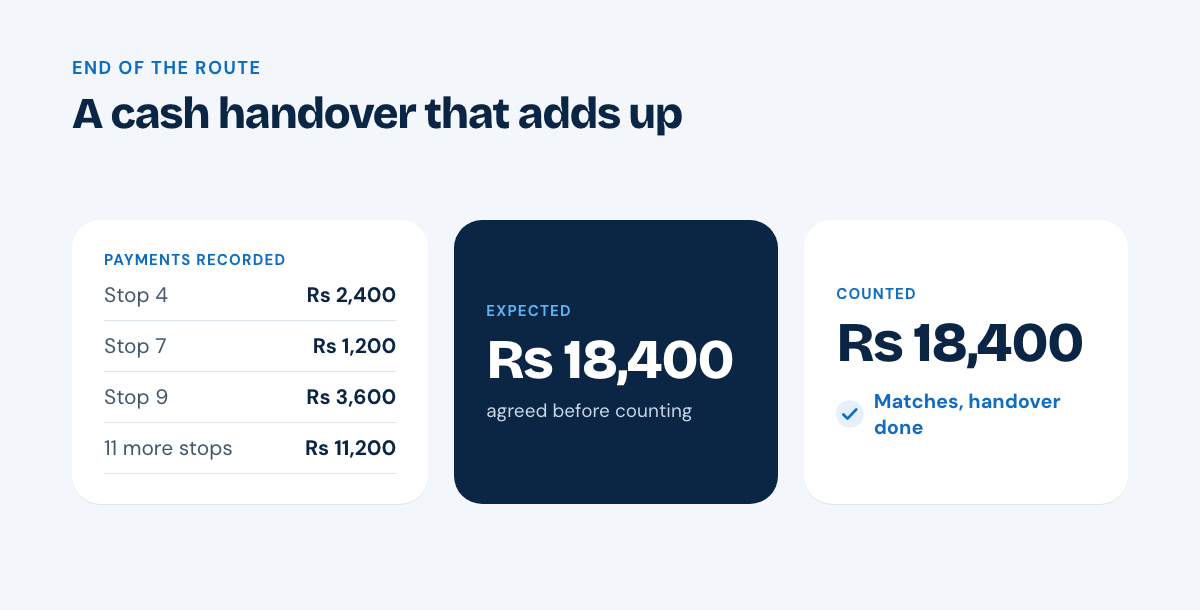
Agree the expected total before counting
At the end of the route, the office and the rider should agree what the total should be before any notes are counted. That total is simply the sum of payments recorded on the route.
Then count the cash. If it matches, the handover takes a minute. If it does not, you already know which stops to check.
Handle differences the same way every time
Write down a simple rule and use it for every rider:
- small differences are recorded and checked the next day
- a payment recorded against the wrong customer is moved, not ignored
- repeated shortfalls are discussed privately, with the records in front of you
Consistency matters more than the exact rule. Riders accept a fair process they understand.
Keep a record of every handover
Each handover should be recorded with the date, the rider, the amount expected and the amount received. Over a few weeks this shows you which routes run smoothly and where to look more closely.
Our rider app adds up each rider's collections as they go, so the evening handover starts from an agreed number.