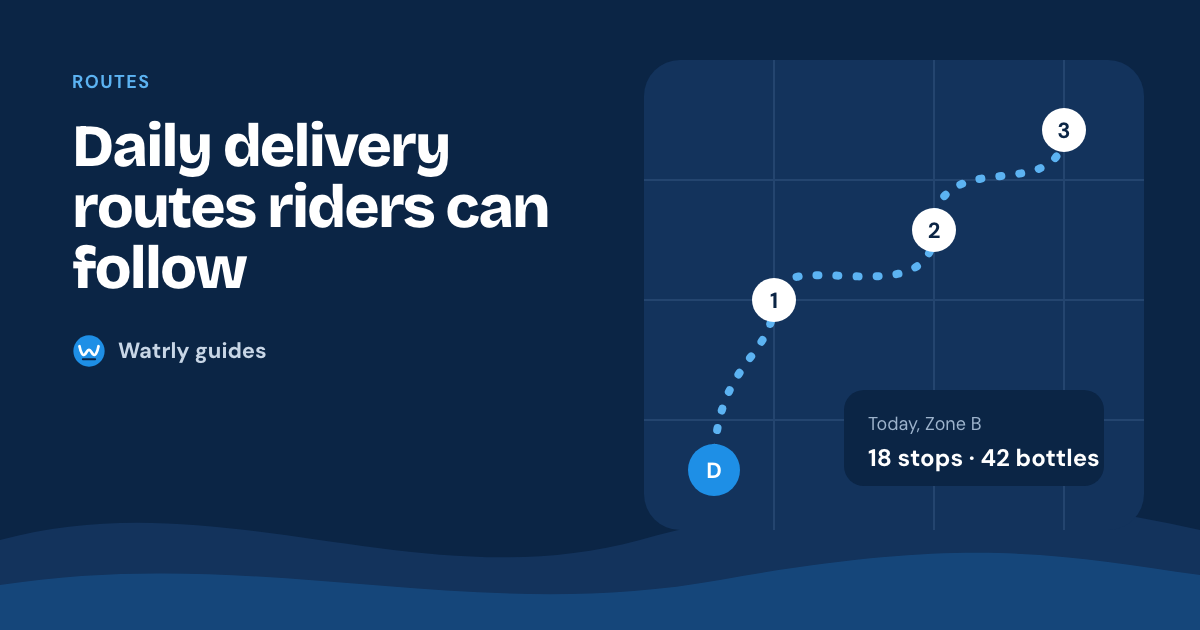
Most water depots deliver to the same customers on the same days, week after week, with a handful of one-off orders mixed in. That makes route planning feel simple, until a rider is off sick, three new orders arrive at 9 a.m. and yesterday's missed stops still need a visit.
A little structure makes the day far calmer.
Start from standing orders
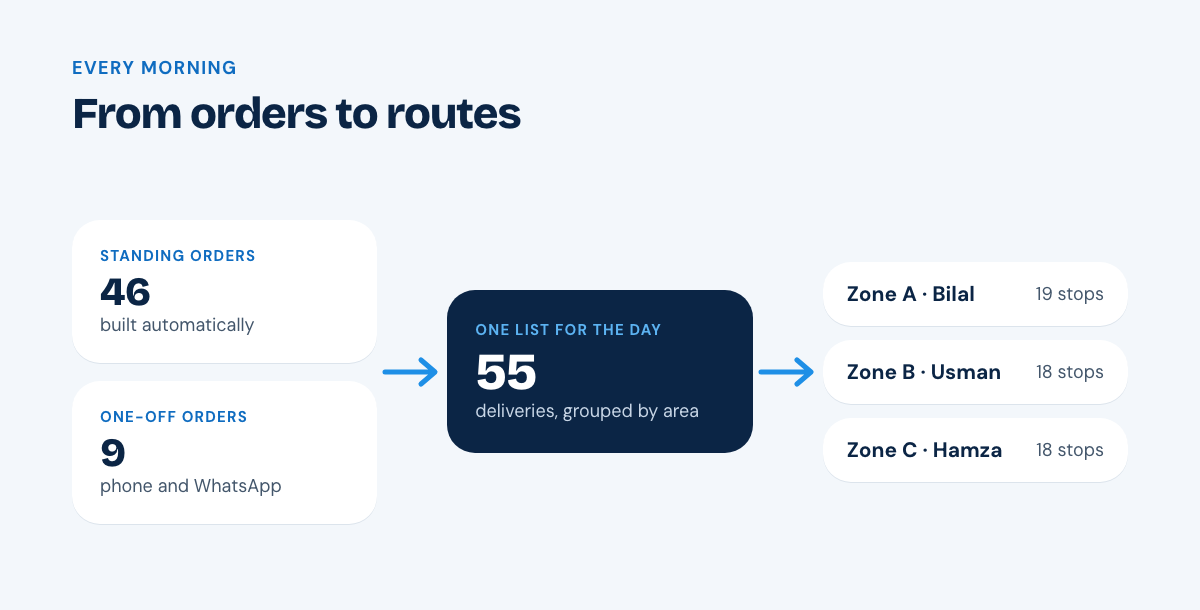
Your regular customers are the backbone of every route. Record each one as a standing order: what they take, how often and on which days. Tomorrow's list should build itself from these, so the office starts each day with most of the work already planned.
Add one-off orders to the same list
Phone and WhatsApp orders should go onto the same list as standing orders, not onto a separate piece of paper. One list means one place to check before riders leave.
Group stops by area
Split the day's deliveries by area or zone, then give each rider one area where possible. Riders who know their streets deliver faster and are better at spotting customers holding too many bottles.
Within an area, let experienced riders choose their own order. They know which offices open late and which gate needs a call ahead.
Plan for the stops that fail
Some deliveries will not happen: nobody home, gate locked, customer asked to skip. Make sure riders mark these as failed rather than just leaving them out, so the office can:
- call the customer the same day
- move the order to tomorrow's list
- see which customers fail often and agree a better day
Check the day before riders leave
Before riders set off, look at each route once: number of stops, bottles to load, and any customer with an unpaid balance to collect. Ten minutes in the morning saves an afternoon of phone calls.
Want to see this working? Read about our rider app or start a free trial.