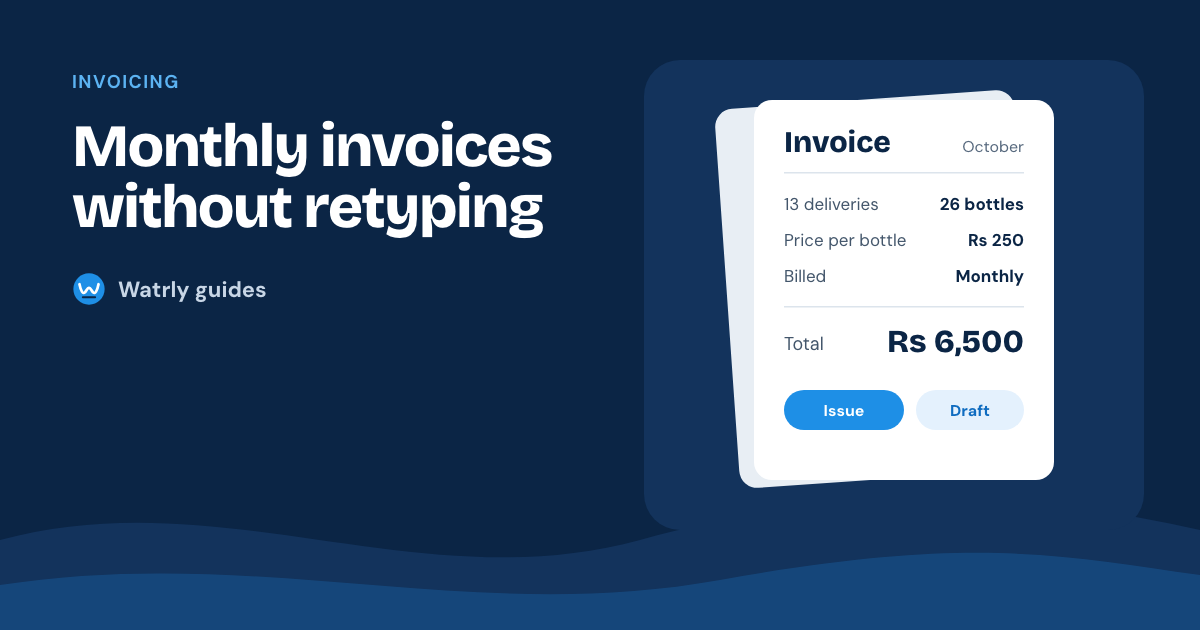
Many customers do not pay at the door. Offices, schools and shops usually want one invoice a month, and many households prefer to pay weekly or monthly too. That means someone in your office has to turn a month of deliveries into a bill.
Done by hand, this is one of the slowest jobs in the depot: go through the register, count each customer's bottles, multiply by their price and type it all up.
Choose how each customer is billed
Start by deciding, for each customer, how they pay:
- per delivery: they pay the rider at the door
- weekly: one invoice for the week's deliveries
- monthly: one invoice for the month
Keep this on the customer's record so nobody has to remember it at the end of the month.
Invoice from what riders recorded
If riders record each delivery at the door, the invoice is already mostly written. At the end of the period, each customer's deliveries are added up at their own price into a draft invoice.
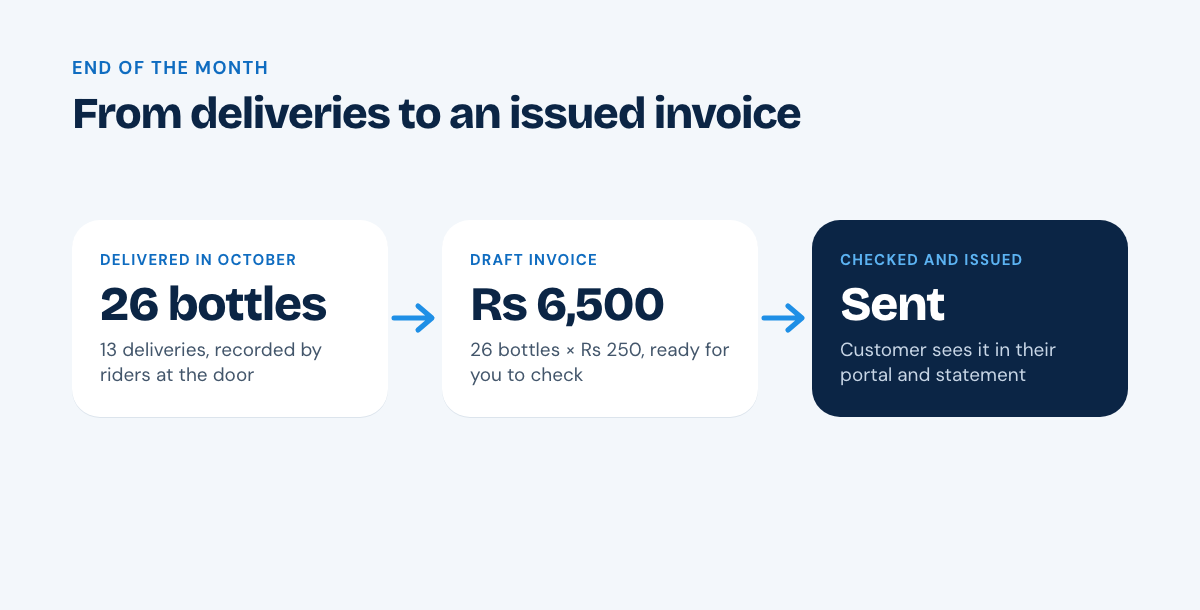
Check before you issue
Drafts exist so a person can look before anything goes out. Before issuing, check:
- Any customer with an unusual total, much higher or lower than last month.
- Customers with a special price or discount.
- Deliveries marked as failed, which should not be on the bill.
Then issue the invoices. Customers with the portal see them straight away, alongside their statement.
Follow up overdue invoices
An invoice is only useful if it gets paid. Once an invoice passes its due date it is marked overdue, so your weekly check can start with a short list of who to call. Our guide to the numbers to check every week shows where this fits.