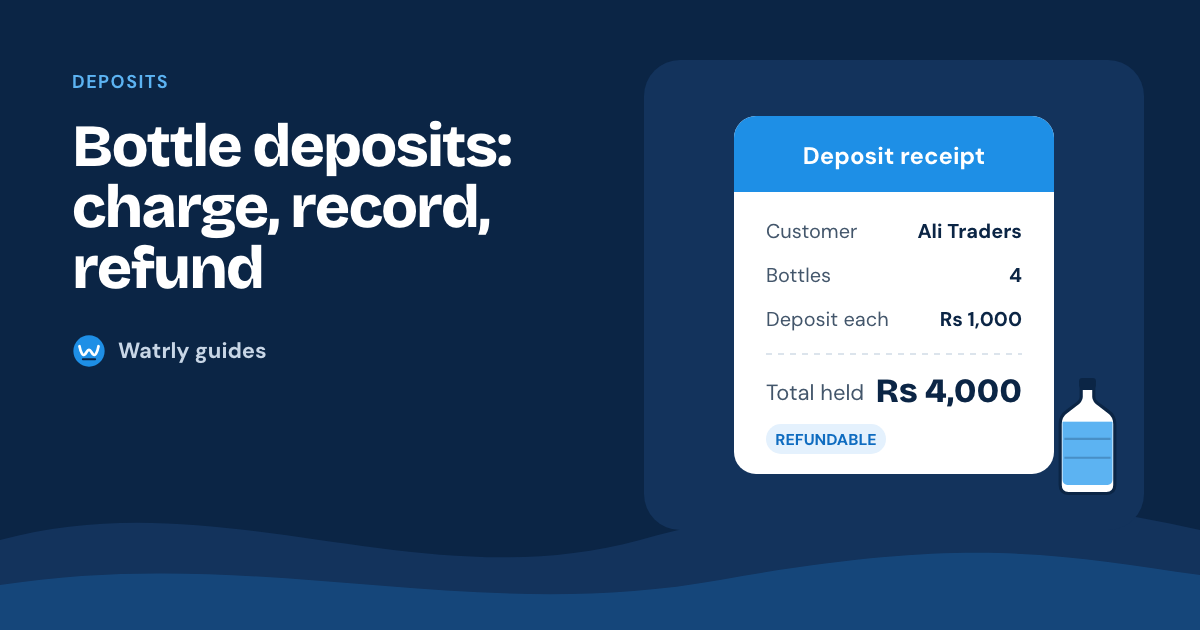
A bottle deposit is a simple idea: the customer pays an amount up front for the bottles they hold and gets it back when they return them. Done well, it protects your stock and makes customers think twice before handing your bottles to someone else.
Done badly, it becomes a source of arguments when a customer leaves and nobody can remember what was paid.
How much to charge
There is no single right answer, but most depots set the deposit close to what a replacement bottle costs them. Too low, and losing a bottle costs the customer less than returning it. Too high, and new customers hesitate to sign up.
Whatever you choose, write it down and use the same amount for everyone on the same terms. Exceptions for big customers are fine, but record them.
Record it on the customer's account
The deposit belongs on the customer's record, next to the bottles they hold, not in a separate notebook. When someone asks "how much deposit did we take from this office?" the answer should take seconds.
Record:
- the amount taken and the date
- how many bottles it covers
- any agreement that differs from your usual terms
Keep deposits apart from sales
A deposit is not income: you may have to pay it back. Keep it out of your daily sales figures so your takings are not overstated, and so you know how much you could owe if customers return bottles.
Refunds without arguments
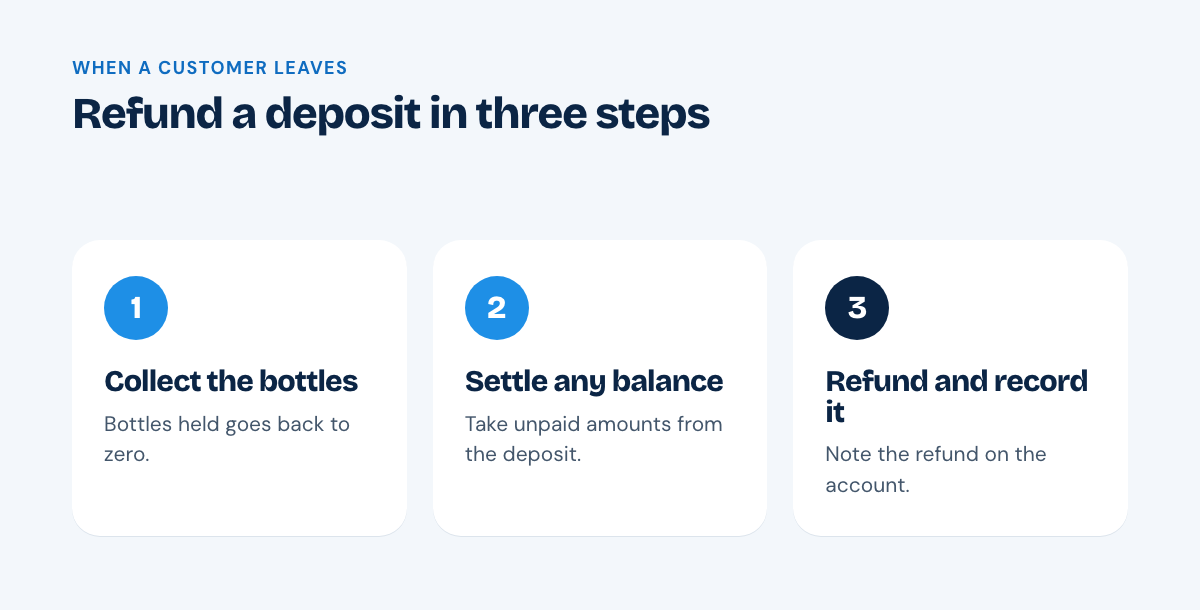
When a customer stops, collect the bottles first, then refund. Check three things before paying out:
- The bottles held count is zero after the collection.
- The customer has no unpaid balance. If they do, settle it from the deposit and refund the rest.
- The refund is recorded on the account, so it is not paid twice.
With the deposit and bottle count on the same record, a refund is a five-minute job instead of a dispute. If you are still on paper, our guide to moving from a register to software explains how to bring these records across.