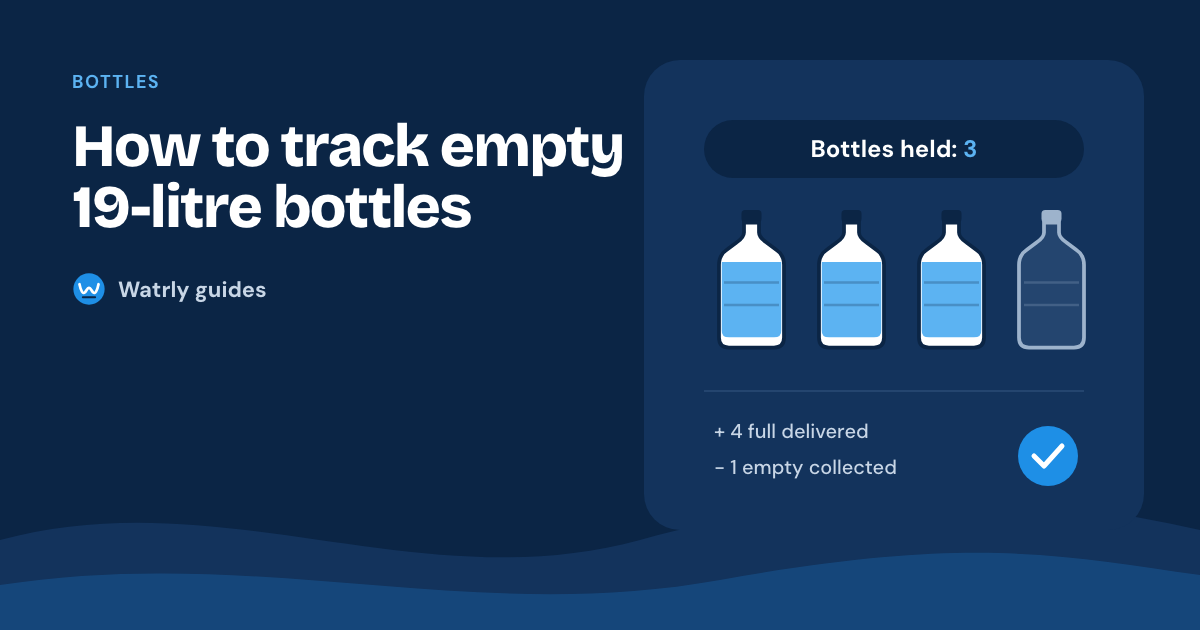
Ask any depot owner what keeps them up at night and bottles come up quickly. A 19-litre bottle costs real money, and every one that sits in a storeroom, a garage or another supplier's van is money you will not see again.
The good news is that most bottle losses are not theft. They come from small gaps in the record: a rider who forgot to note two empties, a customer who moved without returning stock, a register page nobody added up. Close those gaps and losses fall.
Know the number for every customer
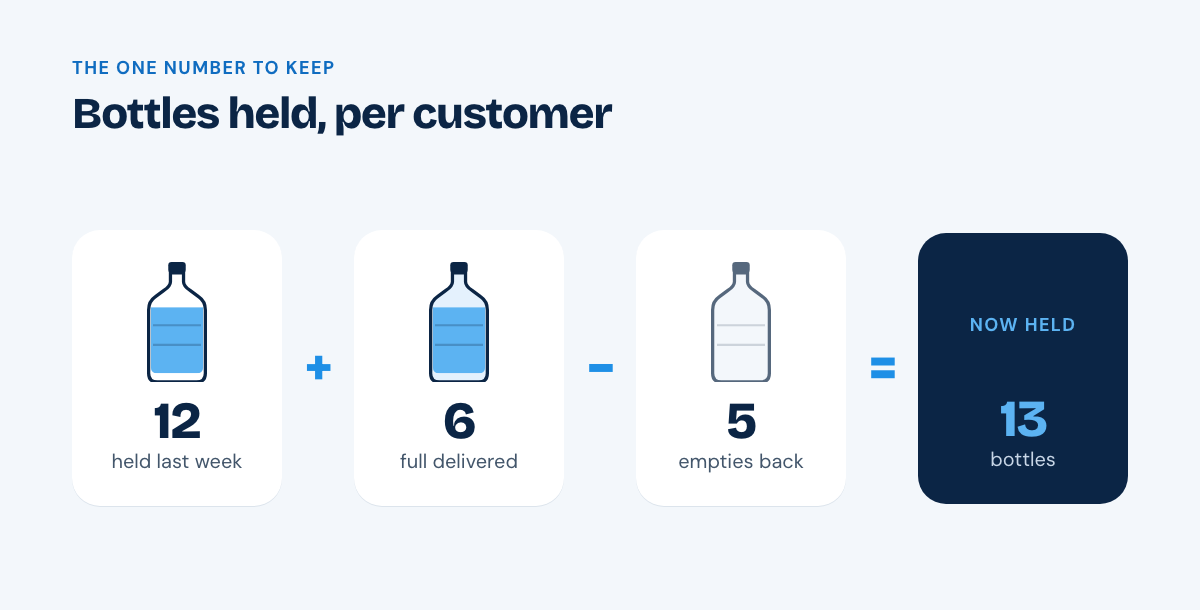
The single most useful figure is bottles held: how many of your bottles each customer has right now. It goes up by the number of full bottles delivered and down by the number of empties collected.
If you only keep one column in your register, keep this one. When it is right, every other question about bottles becomes easy to answer.
Record empties at the door, not at the end of the day
Most counting mistakes happen when riders try to remember a whole route in the evening. Ask them to record full bottles delivered and empties collected at each stop, while the customer is standing there.
With delivery software this takes a few taps in the rider app. On paper, give riders a route sheet with two columns per stop and check it as soon as they are back.
Look for customers holding too many
Once you have bottles held for everyone, sort the list from highest to lowest. You will usually find:
- customers holding far more bottles than they order each week
- closed or moved customers who still have bottles
- offices that took extra bottles for an event and never returned them
Give riders a short list each week of customers to ask for extras back. A polite request on a normal delivery day recovers more bottles than any phone call.
Tie bottles to deposits
A deposit gives customers a reason to return bottles and gives you something to settle against if they do not. Record the deposit on the customer's account when you take it, and refund from that record when they leave. Read more in our guide to bottle deposits.
Check your total every month
Once a month, add up three numbers: bottles with customers, full bottles in your warehouse and empties waiting to be filled. Compare the total with the bottles you have bought. If the gap grows month after month, you know you have a leak to find, before you have to buy another batch.