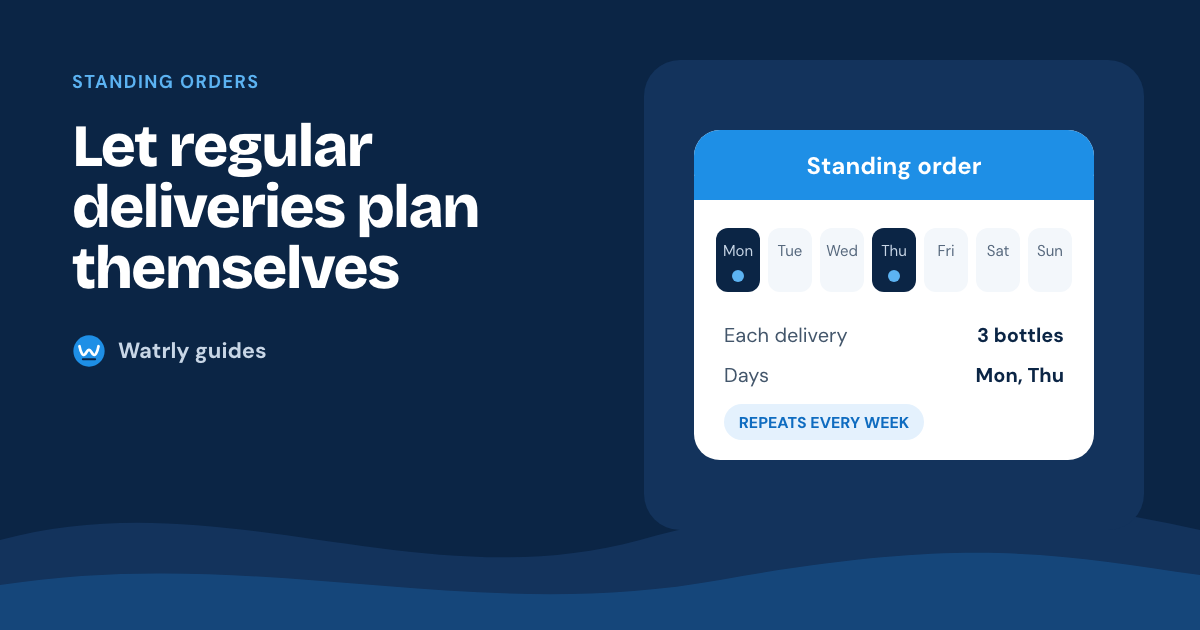
Look at last week's deliveries and you will probably find that most of them went to customers you deliver to every week: the same homes, offices and shops, on the same days, taking about the same number of bottles.
Writing those deliveries out again every morning is wasted time, and it is where mistakes creep in. A customer gets missed because their line was skipped, or gets two visits because they were written down twice.
What a standing order is
A standing order records a regular delivery once: which customer, which address, which days of the week and what they take. From then on, the order for each delivery day is created for you, ahead of time.
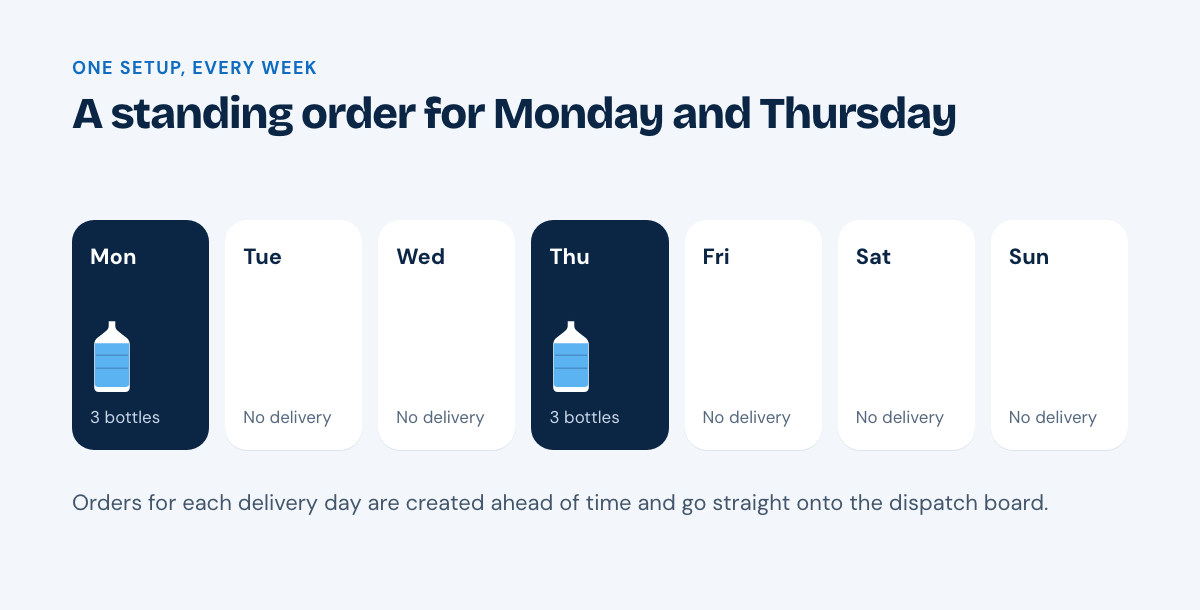
Who should be on one
Put a customer on a standing order when they:
- take water on the same days most weeks
- have done so for a few weeks already
- would rather not call or message every time
Customers who order now and then are better left as one-off orders. Forcing them onto a schedule leads to failed stops when they do not need water.
Plan for holidays and pauses
Regular customers go away. Rather than cancelling their standing order and setting it up again later, pause it between two dates. Nothing is delivered while it is paused, and deliveries start again on their own afterwards.
With the customer portal switched on, customers can ask for a pause themselves, and your office approves it.
Keep one list for the day
Standing orders and one-off orders should end up on the same list, so whoever plans the routes sees every delivery in one place. Read more in our guide to planning daily routes.
Review them every month
Once a month, look for standing orders where the customer has had several failed deliveries or keeps asking for a different amount. A short call to adjust the days or quantity saves wasted trips for everyone.